How Many Bartenders Do You Need for Your Event?
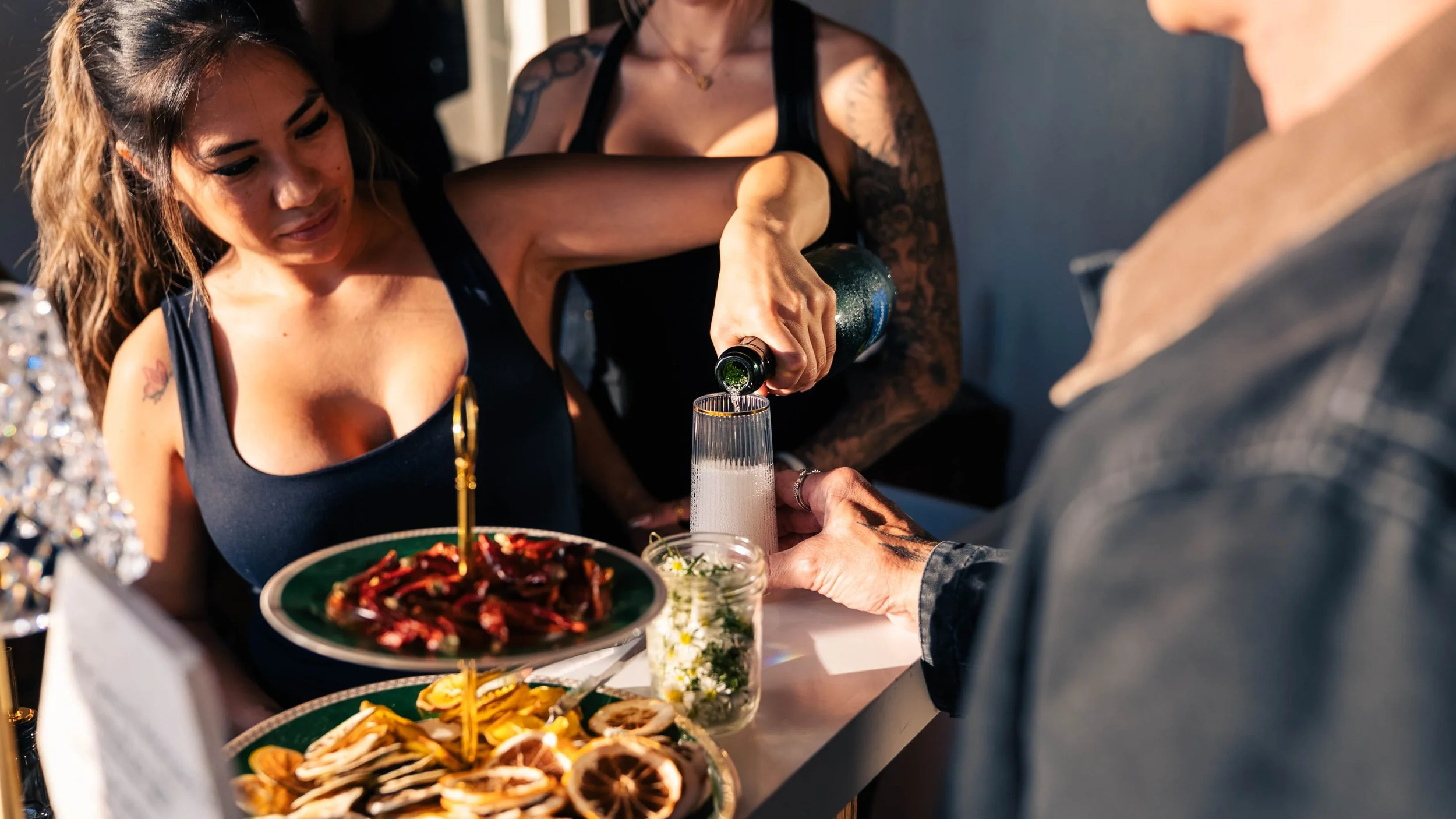
Here's the short answer, the one you came for: plan on one bartender per 50 guests for a full or cocktail bar, or one bartender per 75 guests for beer and wine only. That single ratio handles the vast majority of weddings, birthdays, and corporate events across Southern California — and it's the number we'd give you before we'd give you anything else. A 100-guest cocktail reception wants two bartenders. A 150-guest one wants three. Get this right and the bar hums; get it wrong and you'll feel it on the dance floor.
We learned that the hard way watching other setups, and the right way after thousands of events of our own. At a recent 120-guest wedding in Dana Point, the couple had been quoted "one bartender, you'll be fine" by a cheaper vendor — fine until cocktail hour, when 120 thirsty guests hit a single bar at once and the line ran 18 people deep. Most guides hand you a ratio and stop there. This one gives you the ratio, the exact bartender count for every guest size from 50 to 200, and the real-world factors that quietly change the math so you can staff your event like a pro instead of guessing.
The Quick Answer: How Many Bartenders Do You Need Per Guests
The professional baseline almost every reputable mobile bar uses comes down to two ratios:
Full bar or signature cocktails: one bartender per 50 guests.
Beer and wine only: one bartender per 75 guests.
That difference exists because of how long each drink takes to make. A cocktail with a shake, a strain, and a garnish takes 60 to 90 seconds. Cracking a beer or pouring a glass of wine takes 15. The more complex the pour, the more hands you need behind the bar to keep the line short. This is the core of every bartender to guest ratio decision, and everything else in this guide is just an adjustment on top of it.
How Many Bartenders Per Guest Count (50 to 200 Guests)
Here's the cheat sheet. Find your guest count, and you'll see exactly how many bartenders per guests you need for each bar style. These assume a standard event window of four to six hours.
50 guests — Full/cocktail bar: 1 bartender. Beer & wine only: 1 bartender. A small, intimate event one experienced bartender can run comfortably.
75 guests — Full/cocktail bar: 2 bartenders (a single bartender can manage if budget is tight, but cocktail hour will drag). Beer & wine only: 1 bartender.
100 guests — Full/cocktail bar: 2 bartenders. Beer & wine only: 2 bartenders (one stretches at peak, two is the safe call). This is the how many bartenders for 100 guests answer most couples are searching for.
150 guests — Full/cocktail bar: 3 bartenders. Beer & wine only: 2 bartenders. For bartenders for 150 guests, three keeps even a packed cocktail hour moving.
200 guests — Full/cocktail bar: 4 bartenders. Beer & wine only: 3 bartenders. At this size, a second bar station is often smarter than crowding four people behind one bar.
The takeaway: read down the column that matches your bar style, not your gut. Couples consistently underestimate, because the line only forms once — at cocktail hour, when everyone arrives at once — and that's the moment the whole event remembers.
The Factors That Change the Ratio
The baseline ratio is your starting point, not the final word. Five real-world factors push your number up or down. Account for these and you'll staff with precision.
Cocktail hour is the surge — staff for the peak, not the average
The single biggest mistake in bar staffing is planning for the average instead of the peak. Drink demand is not evenly spread across the night. In the first 30 to 45 minutes — cocktail hour — nearly every guest wants a drink within the same 15-minute window. That's your surge. If your staffing only covers the average pace, the surge becomes a wall. Always staff for cocktail hour, then enjoy the breathing room later in the night.
Signature cocktails vs. beer and wine
A menu of two signature cocktails plus beer and wine is the Southern California sweet spot — special enough to feel custom, fast enough to keep the line moving. But add a build-your-own margarita station, fresh-pressed juices, or an espresso martini service and each drink takes longer, which means more bartenders for the same guest count. Our 7 Signature Cocktails for a SoCal Wedding post is built around drinks that taste elevated without slowing your bar to a crawl.
Drink tickets and consumption limits
If you're using drink tickets or a limited pour (two drinks per guest, then a cash bar, for example), total volume drops and you can sometimes run leaner. Tickets naturally throttle the surge. It's one of the few levers that lets you keep one fewer bartender without punishing your guests — though it changes the feel of the event, so weigh that.
Venue layout and bar placement
A single long bar in a tight Laguna Beach courtyard funnels everyone into one line. A spread-out Palm Springs estate or a beachfront lawn in Huntington Beach may call for two bar stations so guests aren't hiking across the property for a drink. More stations usually means more bartenders, but it can dramatically cut wait times and keep energy flowing in every corner of the event.
Self-serve and satellite stations
A self-serve beer-and-wine station, a champagne tower, or a batched-cocktail dispenser takes pressure off your main bar and can let you hold staffing steady even as guest count climbs. Used well, a smart station is cheaper than an extra bartender and keeps the experience feeling abundant.
Why Too Few Bartenders Empties the Dance Floor
It's tempting to save money by cutting one bartender. Here's the chain reaction that decision sets off, and why it costs more than it saves.
A bar that's understaffed creates a line. A line pulls people off the dance floor. When a guest faces a 15-minute wait for a drink, they do one of two things: they stop drinking (and your hosted bar budget goes to waste), or they post up near the bar to wait — which means they're not dancing, not mingling, and not generating the energy that makes an event feel alive. The bar isn't just a service station; it's the social engine of the night. A slow bar quietly flattens the whole party.
The fix is almost always one more bartender. At a 150-guest wedding, the difference between two and three bartenders might be $300 to $500 total — and it's the difference between a 12-minute cocktail-hour wait and a 3-minute one. We've never had a host tell us they regretted adding a bartender. We've heard plenty wish they had.
The Cost Trade-Off of Adding One Bartender
So what does that extra bartender actually cost, and is it worth it? In Southern California, an additional bartender typically runs $45 to $75 per hour, or roughly $200 to $400 added to a standard 4-to-6-hour package. Set against a wedding or milestone event that already costs thousands, it's one of the highest-return dollars on the entire budget.
Here's how we'd frame the decision:
If you're between two numbers, round up. The cost of being slightly overstaffed is small. The cost of being understaffed is a line your guests remember.
Match the spend to the moment. A relaxed 60-guest backyard birthday can run lean. A 150-guest wedding where photos and energy matter should never gamble on the bar.
Ask how staffing maps to your package. A good company prices the bartender count transparently against your guest list and menu.
For the full picture on how staffing folds into total pricing, see our complete mobile bar pricing breakdown. And if you're still weighing your options, our look at mobile bar vs. venue bar explains why a dedicated mobile team usually staffs an event more generously than a built-in venue bar will.
How Many Bartenders for a Wedding, Specifically
Weddings deserve their own note, because the surge is sharper than at almost any other event. Guests arrive in a tight window after the ceremony, and they all want a drink at once during cocktail hour. For a wedding, we lean to the generous side of the ratio.
Up to 75 guests: 2 bartenders for a cocktail bar — the cocktail-hour rush at a wedding justifies the second pair of hands even at smaller counts.
100 guests: 2 bartenders, minimum.
150 guests: 3 bartenders.
200+ guests: 4 bartenders or two bar stations.
The question of how many bartenders for a wedding comes up constantly, and our honest answer is to never staff a wedding bar at the bare minimum. It's the one event where the line forming at the wrong moment shows up in the photos.
How Many Bartenders Do You Need: FAQ
How many bartenders do you need for 100 guests?
For 100 guests, plan on two bartenders for a full or cocktail bar. You can sometimes run one for a beer-and-wine-only event, but two keeps cocktail hour from backing up. Two is the safe, professional call for a 100-guest reception.
How many bartenders do you need for 150 guests?
For 150 guests, plan on three bartenders for a cocktail bar, or two for beer and wine only. Three keeps even a packed cocktail-hour surge moving with short waits.
What is the standard bartender to guest ratio?
The standard bartender to guest ratio is one bartender per 50 guests for a full or cocktail bar, and one per 75 guests for beer and wine only. Adjust upward for complex menus, sharp cocktail-hour surges, or spread-out venues.
Do I need fewer bartenders for a beer and wine only bar?
Yes. Because beer and wine pour far faster than mixed cocktails, you can serve roughly one bartender per 75 guests instead of one per 50. A 150-guest beer-and-wine event can often run comfortably with two bartenders.
Is one bartender enough, or do I need two?
One bartender works well up to about 50 guests for a cocktail bar or 75 for beer and wine. Past that, a single bartender creates a line at cocktail hour. If you're between one and two, choose two — the small added cost prevents the wait your guests will remember.
Do I need a backup bartender?
For most events, no — a reputable mobile bar staffs to the ratio and builds in pacing so one person stepping away never stalls the bar. A professional company also has coverage protocols if a staffing issue ever comes up, which is one of the questions worth asking before you hire.
How do I calculate the number of bartenders I need?
Take your guest count, divide by 50 for a cocktail bar or 75 for beer and wine, and round up. Then add a bartender if you have a complex cocktail menu, a spread-out venue, or 100-plus guests where cocktail hour will surge hard.
Ready to Staff Your Bar the Right Way?
If you want a bar that's staffed to the right ratio — enough licensed, insured bartenders to keep the line short and the dance floor full — plus a custom cocktail menu built around your guest count, we'd love to put a package together for you. Tell us your numbers and we'll tell you exactly how many bartenders your event needs.
Sips Up Mobile Bar serves Newport Beach, Laguna Beach, Dana Point, San Clemente, Mission Viejo, Los Angeles, Anaheim, Huntington Beach, and Palm Springs.
Build Your Custom Cocktail Menu →
Want to see the full lineup of bar styles and packages we staff? Explore our mobile bar services.