Wedding Bar Packages Explained: Open Bar vs. Cash Bar vs. Limited Bar
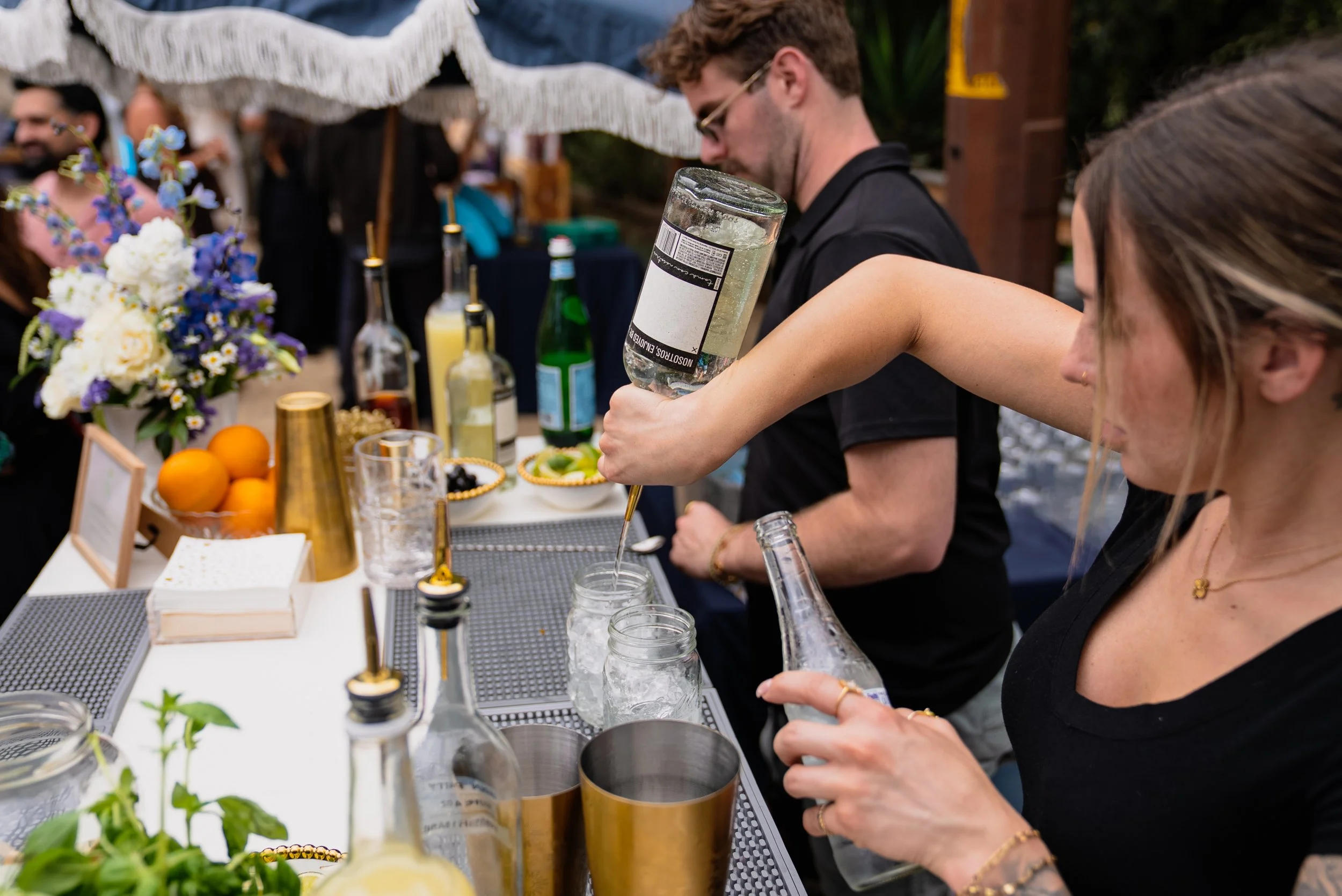
Somewhere between picking the venue and finalizing the playlist, almost every couple hits the same quiet stall: how, exactly, are we going to do the bar? Last season we built bar packages for everything from a 60-guest garden reception in Mission Viejo to a 180-guest celebration in Newport Beach, and the question that came up first — every single time — was some version of "open bar vs cash bar wedding, which is right for us?" It feels like a simple either/or. It almost never is.
Most guides answer that question with a budget chart and call it done. The honest, field-tested version has more moving parts: there are really three or four wedding bar options, each with its own cost math, its own etiquette, and its own way of being handled by a mobile bar. Below we'll define every option plainly, weigh the trade-offs even-handedly (yes, including how a cash bar wedding actually reads to guests), and show you how to control cost without making anyone reach for their wallet. By the end you'll know exactly how to do the bar at a wedding for your guest count, your budget, and your venue's rules.
The Four Main Wedding Bar Options, Defined
Before you can choose, you need the vocabulary. Here's what each term actually means in practice.
Open bar (hosted bar): You — the couple or hosts — cover the full cost of every drink. Guests order whatever they like, all night, and never pay a thing. This is the gold standard for guest experience and the most expensive option.
Cash bar: Guests pay for their own drinks, usually at a per-drink price set by the venue or bar service. The hosts pay little to nothing toward alcohol itself. Cheapest for you, but it carries real etiquette baggage (more on that below).
Limited bar (partial bar): A hosted bar with a deliberately narrowed menu — most commonly beer, wine, and one or two signature cocktails. You still pay, but you control what's poured, which controls the bill. This is the SoCal sweet spot for a reason.
Drink-ticket bar: A hybrid. Each guest gets a set number of free drink tickets (say, two or three), then pays cash for anything beyond that. It caps your cost while still feeling hosted for the first round or two.
Two more terms you'll hear when you start getting quotes:
Consumption vs. flat rate: Consumption means you pay for the actual alcohol poured (a running tab, settled after). Flat (or per-person) means one fixed price per guest regardless of how much they drink. Lighter-drinking crowds often win with consumption; heavy-pour crowds often win with flat.
Dry hire: You buy all the alcohol yourself and hire a bar service to provide staff, setup, and service only. It's a cost lever, not a bar style — you can run an open, limited, or ticketed bar as a dry hire.
Open Bar Wedding: The Pros and Cons
An open bar wedding is what most guests picture when they imagine a great reception. It's generous, it's seamless, and nobody has to think about money on your wedding day.
The pros:
Best possible guest experience. No fumbling for cards, no doing mental math at the bar, no awkwardness. People relax and the party flows.
Faster service lines. When there's no payment step, the bar moves quicker — which matters most during the cocktail-hour rush.
It reads as hospitality. Hosting the bar signals "you're our guest," and guests feel it.
The cons:
It's the most expensive option, full stop. For a 100-guest, 5-hour SoCal wedding, the alcohol alone commonly runs $1,500–$2,500+ depending on whether you pour well or premium spirits.
Harder to predict if billed by consumption, since the total rides on how much your specific crowd drinks.
If a fully open bar fits your budget, it's the easiest "yes" in this article. If it makes you wince, keep reading — there's a way to keep almost all of the open-bar feel for meaningfully less.
Cash Bar Wedding: Handle With Care
Let's be even-handed: a cash bar wedding is a legitimate, common choice, and it is not a moral failing. For a tight budget, a very large guest list, or a casual celebration, it can be the responsible call. But you should walk in clear-eyed about how it lands.
Why couples choose it:
It removes the alcohol cost from your budget almost entirely — often the single biggest bar saving available.
It can curb over-drinking, since a price tag naturally slows consumption.
The etiquette reality:
Among wedding guests and etiquette traditions alike, cash bars carry a perception cost. The long-standing view is that anything you invite guests to — including drinks — is something you host. Guests who didn't expect to pay can be caught without cash, and a surprise charge at a celebration can read as less-than-hospitable, fairly or not. None of that means you can't do it. It means wedding bar etiquette rewards a heads-up. If you go cash, signal it gently on your details card or website ("bar available for purchase"), and make sure there's an ATM or card-payment option on site so no one is stuck.
Here's the part most couples don't realize: you rarely have to choose between a full open bar and a full cash bar. The options in between solve most of the tension.
Limited Bar Wedding: The SoCal Sweet Spot
If we could nudge most couples toward one option, it's this. A limited bar wedding — beer, wine, and one or two signature cocktails, all hosted — captures the warmth of an open bar while quietly capping the cost.
Why it works so well:
It feels completely hosted. Guests order freely from a thoughtful menu and never see a price. The experience reads as generous, not restricted.
It controls the bill at the source. By removing the full top-shelf spirit list, you cut the most expensive (and least-ordered) pours without anyone missing them.
It's faster to serve. A focused menu means shorter prep, quicker tickets, and a line that actually moves.
It's more personal. Two signature cocktails named after your dog and your hometown say more about you than an unlimited liquor rail ever will.
The math is the appeal: a well-built limited bar often lands 20–40% below a comparable full open bar, with most guests never noticing a thing was "limited." If you want a head start on the menu, our 7 Signature Cocktails for a SoCal Wedding post is a ready-made shortlist built for our climate and crowds.
How to Cut Bar Cost Without a Cash Bar
This is the question behind the question. Most couples considering a cash bar are really just trying to control spending — and there are gentler levers that protect both your budget and your guests' experience.
Trim the menu, not the hosting
Drop from a full liquor rail to beer, wine, and one to two signature cocktails. It's the highest-return move on the list and nobody feels shortchanged.
Run a timed (or "soft close") bar
Host a full bar during cocktail hour and dinner, then shift to beer and wine only for the late dance-floor stretch. Consumption naturally slows after dinner anyway, so you trim the tail of the tab where it matters least.
Use drink tickets as a middle ground
Give each guest two or three tickets for hosted drinks, then let them buy beyond that. You stay the gracious host for the rounds that matter and cap your exposure on the heavy drinkers.
Choose consumption billing for a lighter crowd
If your guest list skews toward modest drinkers, paying for what's actually poured can beat a flat per-person rate. To pressure-test the numbers, our How Much Alcohol for a Wedding calculator gives you the per-guest math before you commit.
Provide your own alcohol (dry hire)
If your venue and bar company allow it, buying your own alcohol removes the markup. Just buy correctly — over-buying erases the savings, and unopened-bottle return policies vary.
A Quick Cost Comparison
For a typical 100-guest, 5-hour Southern California wedding, here's how the options tend to stack up. Ranges cover alcohol and service; your venue and pour level will move the numbers.
Open bar — Hosts pay all · Highest — full alcohol + service · Best
Limited bar — Hosts pay (narrowed menu) · Roughly 20–40% less than open · Nearly as good
Drink-ticket bar — Hosts pay a capped amount · Mid-range, predictable · Good, if framed well
Cash bar — Guests pay per drink · Lowest for hosts · Most likely to read poorly
The clear takeaway: the biggest savings jump is from open to limited, not from open to cash. You capture most of the budget relief while keeping the hospitality intact. For a deeper breakdown of where mobile bar dollars actually go, see our How Much Does a Mobile Bar Service Cost guide.
How a Mobile Bar Handles Each Option
A professional mobile bar is built to run any of these formats — and the right setup makes each one smoother.
Open bar: We staff to your guest count (the working ratio is one bartender per 50 guests), build a full menu, and keep the line short during the cocktail-hour crush.
Limited bar: We help you design a beer-wine-plus-signatures menu that fits your budget and your palette, then pour it fast and clean all night.
Cash bar or drink tickets: We handle the payment logistics so you don't have to — point-of-sale, ticket redemption, and clear signage — and coordinate with your venue on what's permitted.
Dry hire: You provide the alcohol; we bring licensed, insured bartenders, the bar build, tools, ice, and service.
One important note on rules: alcohol service at weddings is governed by venue policy and California ABC regulations, and some venues and permits restrict cash sales specifically. We're licensed and insured, but permit and ABC-license questions depend on your exact venue and date — always confirm those locally with your venue and the relevant authority before you lock a format. If you're still weighing setups, our Mobile Bar vs. Venue Bar comparison is a useful next read, and you can see the full range of formats on our Services page.
How to Choose: Guest Count, Budget, and Venue
Three inputs settle most decisions.
Guest count. The larger the list, the more an open bar costs and the more a limited or ticketed bar saves. At 150+ guests, a limited bar's savings become substantial fast.
Budget. Decide your bar number first, then work backward. If a full open bar fits, great. If not, go limited before you go cash — it protects the experience.
Venue rules. Confirm what your venue allows before you fall in love with a format. Some prohibit outside alcohol; some restrict cash sales; some require specific insurance on file.
For most SoCal couples, the answer lands on a hosted limited bar with two signature cocktails — generous, on-budget, and unmistakably yours.
Open Bar vs. Cash Bar Wedding FAQ
Is a cash bar at a wedding tacky?
Not inherently, but it carries a perception cost. Traditional wedding bar etiquette holds that anything you invite guests to, you host — so a surprise charge can read as less hospitable. If you go cash, give guests a heads-up in advance and provide an ATM or card payment on site. Better yet, consider a limited bar instead.
What's the cheapest way to do the bar at a wedding without a cash bar?
A limited bar wedding — beer, wine, and one or two signature cocktails, all hosted — is usually the best value. It often costs 20–40% less than a full open bar while still feeling completely hosted. Timed bars, drink tickets, and dry hire are other ways to trim cost gracefully.
What is a limited bar at a wedding?
A limited (or partial) bar is a hosted bar with a deliberately narrowed menu, most often beer, wine, and a couple of signature cocktails. You still cover the cost, but a focused menu controls the bill and speeds up service.
What's the difference between consumption and flat-rate bar pricing?
Consumption means you pay for the alcohol actually poured, settled as a tab afterward. Flat (per-person) means one fixed price per guest no matter how much they drink. Lighter-drinking crowds often save with consumption; heavier-drinking crowds often save with flat.
Are drink tickets a good idea for a wedding?
They can be a smart middle ground. Each guest gets a few hosted drinks, then pays beyond that. It keeps the early rounds feeling generous while capping your total cost — just frame it warmly so it doesn't feel like a hard cutoff.
Can a mobile bar run a cash bar in California?
Often yes, but it depends on the venue's policy, your permit, and California ABC rules — some venues and permits restrict cash sales specifically. We're licensed and insured, but always confirm cash-sale rules with your venue and the relevant local authority before booking.
How many bartenders do I need for an open bar?
Plan on one bartender per 50 guests for a cocktail bar. A 100-guest open bar should have two to keep the cocktail-hour line short; 150+ guests usually needs three.
Ready to Build the Right Bar for Your Wedding?
If you want a wedding bar that fits your budget and your guests — open, limited, or somewhere in between — built and poured by licensed, insured bartenders at your next Southern California wedding, birthday, or private event, we'd love to design a package around you.
Sips Up Mobile Bar serves Newport Beach, Laguna Beach, Dana Point, San Clemente, Mission Viejo, Los Angeles, Anaheim, Huntington Beach, and Palm Springs.
Build Your Custom Cocktail Menu →
Still deciding where the bar should live on the day? Read Mobile Bar vs. Venue Bar: Which Is Right for Your Event.