What Is a Mobile Bar? Everything You Need to Know (2026 Guide)
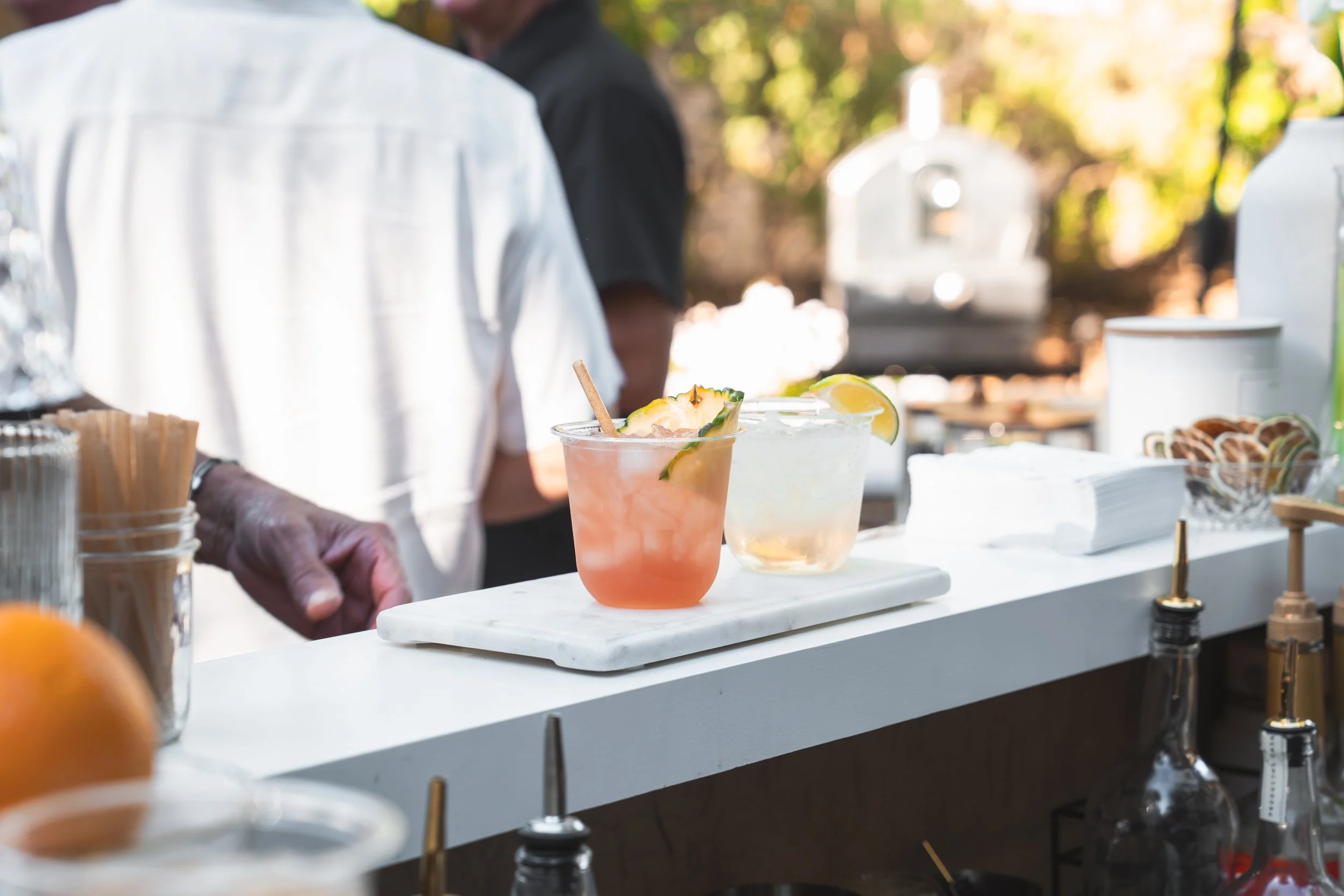
At a recent 150-guest backyard wedding in Mission Viejo, the most photographed spot at the reception wasn't the cake table — it was the bar. A styled bar unit rolled in that morning, two licensed bartenders built a two-cocktail signature menu around the couple's story, and by cocktail hour there was a line of guests holding drinks they couldn't get anywhere else. If you've seen something similar at an event and wondered "wait, what is a mobile bar, exactly, and how do I get one?" — this guide is for you.
Plenty of articles answer the question in one vague sentence and move on. After thousands of pours across Orange County, Los Angeles, and Palm Springs, we can give you the full, field-tested picture: what a mobile bar actually is, what's included, how the process works from booking to last call, what it costs in 2026, and whether it's the right call for your event.
The Short Answer: What Is a Mobile Bar?
A mobile bar is a complete, professional bar operation that travels to your event. Instead of holding your party somewhere with a built-in bar, the bar comes to you — a styled bar setup, licensed and insured bartenders, a custom drink menu, and all the tools, ice, cups, and garnishes needed to run full drink service anywhere from a backyard in San Clemente to a rooftop in Los Angeles.
The key word is complete. A mobile bar service is not just a bartender showing up with a shaker, and it's not just a pretty cart you rent and staff yourself. It's the whole package: the physical bar, the people behind it, the menu, the gear, and the setup and teardown — delivered as one service.
That distinction matters because it's what separates a mobile bar from the two things it's most often confused with: a venue's in-house bar and a freelance bartender. We compare the first option in depth in our Mobile Bar vs. Venue Bar guide.
What's Included in a Mobile Bar Service
Packages vary by company, but a professional mobile bar in Southern California generally includes four things.
The bar itself
The centerpiece is a physical bar — a converted trailer, a rolling bar cart, or a freestanding styled bar unit — that's designed to look good in photos and work hard in service. It arrives, gets staged and styled to fit your event, and disappears at the end of the night. You don't rent it separately, and you don't have to figure out how a bar fits your space; that's the company's job.
Licensed, insured bartenders
Staffing is built into the service. Professional companies send bartenders who are licensed and carry liquor liability insurance — something many venues now require before they'll allow alcohol service at all. Staffing scales with your guest count; the working ratio is one bartender per 50 guests, which we break down fully in How Many Bartenders Do You Need for Your Event.
A custom cocktail menu
This is the part guests remember. A good mobile bar builds the menu around your event — usually two signature cocktails plus beer and wine for a wedding, or a themed spread for a corporate party or birthday. Menus are designed for both taste and speed, so the line keeps moving at a 120-guest cocktail hour.
All the working gear
Tools, ice, coolers, cups, napkins, garnishes, mixers, setup, and complete teardown. When the night ends, the bar packs itself out and your venue (or backyard) looks like it did that morning.
How Does a Mobile Bar Work? From Booking to Last Call
The process is simpler than most people expect. Here's the typical arc:
Inquiry and quote. You share the date, location, guest count, and hours. A real quote should itemize staffing, hours, and inclusions — not just hand you one number.
Menu design. The bar team builds a drink menu around your event, your crowd, and the season. A hot August afternoon in Anaheim calls for a different list than a December holiday party.
The alcohol plan. Most SoCal mobile bars work on a "dry hire" model — you purchase the alcohol (often at wholesale or warehouse prices, with a shopping list provided), and the bar provides everything else. More on why below.
Arrival and setup. The team typically arrives 1–2 hours before service to stage the bar, ice everything down, prep garnishes, and do a final walkthrough.
Service. Bartenders pour for the contracted window — usually 4–6 hours — managing the line, the menu, and responsible service throughout.
Teardown. The team breaks down, packs out, and leaves the space clean. Leftover alcohol you purchased stays with you.
From your side, the total effort is a few emails and one shopping trip — or less, if you add provisioning help.
Why Don't Mobile Bars Sell the Alcohol?
This surprises almost everyone: in California, most mobile bar services do not sell alcohol, and that's by design, not a shortcut. Retail alcohol sales require specific ABC licenses tied to fixed locations. The standard, above-board model for private events is that the host supplies the alcohol, and the mobile bar supplies everything else — the bartenders, the bar, the mixers, the service, and the liquor liability insurance.
For you, the model has a real upside: you pay retail (or warehouse) prices for bottles instead of the marked-up per-drink pricing a traditional venue bar charges. There's no corkage-style markup on your own margaritas. Rules and venue requirements vary, so always confirm permit and licensing details for your specific venue and city — a professional bar company will walk you through it.
The Types of Mobile Bars You'll See in Southern California
"Mobile bar" covers a few different physical formats, and companies often offer more than one:
Bar trailers. Converted horse trailers and custom-built trailers are the show-stoppers — a full bar inside a styled shell that anchors outdoor events, festivals, and big backyard weddings.
Rolling bar carts. Compact and elegant, ideal for indoor venues, rooftops, and spaces where a trailer can't go. Think champagne carts at a bridal shower or an espresso martini cart at a reception.
Freestanding styled bars. Modular bar units that set up almost anywhere — the workhorse format for weddings and corporate events because they scale and style easily.
Satellite stations. Add-on stations — a margarita bar, a mimosa table, a zero-proof station — that run alongside the main bar at larger events.
The right format depends on your space, guest count, and look. A beachfront ceremony in Laguna Beach, a warehouse corporate party in Los Angeles, and a poolside birthday in Palm Springs each call for a different setup, which is exactly the kind of thing a site walkthrough or a few photos will settle.
Mobile Bar vs. DIY: Why Not Just Set Up a Table?
Every host has considered it: a folding table, a few bottles, a cooler of beer, and a "help yourself" sign. For a casual 15-person hangout, that's fine. Past that, the DIY bar has three predictable failure modes we've watched play out at hundreds of events.
Someone has to run it — and it ends up being you. The host who planned the party spends the night restocking ice and mixing drinks instead of enjoying it. At a recent 60-guest birthday in Huntington Beach, the client told us the entire reason she booked was that she'd DIY'd the year before and never left the drink table.
Service pace collapses. Self-serve bars bottleneck the moment two people want mixed drinks at once, and quality is whatever each guest can improvise.
Nobody is managing consumption. A licensed bartender is trained to pace service and cut people off gracefully. A self-serve table has no brakes — which matters for both the vibe and your liability as a host.
A mobile bar solves all three at once, which is why it has become the default for anything bigger than a small dinner party.
What Does a Mobile Bar Cost in 2026?
Full pricing deserves its own article — and it has one: How Much Does a Mobile Bar Service Cost. The short version for Southern California:
Typical mobile bar package: $650–$1,800 for an 80–120 guest event, covering bartenders, the bar, setup, service, and teardown.
Full-service premium packages: $2,000–$4,500+ for larger events, multiple bartenders, and specialty stations.
Alcohol: budgeted separately since you purchase it — commonly $1,500–$2,500 for 100 guests over 5 hours, depending on how premium you pour.
The variables that move the number are guest count, hours, menu complexity, and travel. Get those four into your first inquiry and you'll get an accurate quote instead of a range.
Is a Mobile Bar Right for Your Event?
Mobile bars started in the wedding world, but in 2026 they show up everywhere. The events where they earn their keep:
Weddings — especially backyard, beach, vineyard, and estate weddings where there's no built-in bar at all.
Corporate events — product launches, holiday parties, and team celebrations where a branded bar moment beats a folding table with bottles on it.
Birthdays and milestone parties — a bar with your name on the menu turns a house party into an event.
Bachelorette and shower weekends — mimosa carts and spritz bars are the format's natural habitat.
Backyard parties of any kind — because the alternative is you playing bartender at your own party.
The honest exception: if your venue already includes a full bar package you're happy with, a mobile bar may be redundant. Everywhere else — and at any venue that's really just a beautiful empty space — it's usually the easiest line item on the whole planning sheet. You can see the full range of setups on our services page.
Mobile Bar FAQ
Is a mobile bar the same as hiring a bartender?
No. A freelance bartender brings skills; a mobile bar service brings the entire bar — the physical setup, the staff, the menu, the gear, insurance, and the setup and teardown. It's the difference between hiring a cook and hiring a caterer.
Do mobile bars provide the alcohol?
In California, generally no — you purchase the alcohol and the bar provides everything else, including a shopping list calculated for your guest count. This usually saves money versus venue per-drink pricing. Confirm specifics for your venue and city.
Do mobile bars need power and water?
Most setups are self-sufficient or need only a standard outlet. For remote sites — a bluff in Dana Point, a canyon backyard — a good company confirms logistics in advance rather than discovering problems on the day.
How far in advance should you book a mobile bar?
For SoCal weddings and peak-season (May–October) weekends, 3–6 months is safe; popular dates go earlier. Corporate and holiday parties should book by early fall.
Can a mobile bar serve non-alcoholic drinks?
Yes — zero-proof menus are one of the fastest-growing requests we see. Signature mocktails, spritzes, and coffee drinks give non-drinking guests something better than soda water.
Does a mobile bar work indoors?
Absolutely. Rolling carts and freestanding bar units are built for indoor venues, and setup is typically quicker than an outdoor trailer install.
How much space does a mobile bar need?
A freestanding bar or cart usually needs about a 6-by-8-foot footprint plus room for the line to form; a trailer needs vehicle access and roughly a parking-space-sized area. Share a few photos of your space with your quote request and the company will confirm fit before you book.
Ready to Bring the Bar to Your Event?
Now you know what a mobile bar is — the next step is seeing what one looks like built around your event. If you want professional mobile bar service (and a matching custom cocktail menu) poured by licensed, insured bartenders at your next Southern California wedding, birthday, or private event — we'd love to build a package for you.
Sips Up Mobile Bar serves Newport Beach, Laguna Beach, Dana Point, San Clemente, Mission Viejo, Los Angeles, Anaheim, Huntington Beach, and Palm Springs.
Build Your Custom Cocktail Menu →
Vetting companies? Start with our 5 Questions to Ask Before Hiring a Mobile Bartender checklist.